Understand Your Vision
The foundations of visual science explained in plain language. Understanding how your eye works helps you understand what an IOL can and cannot do.
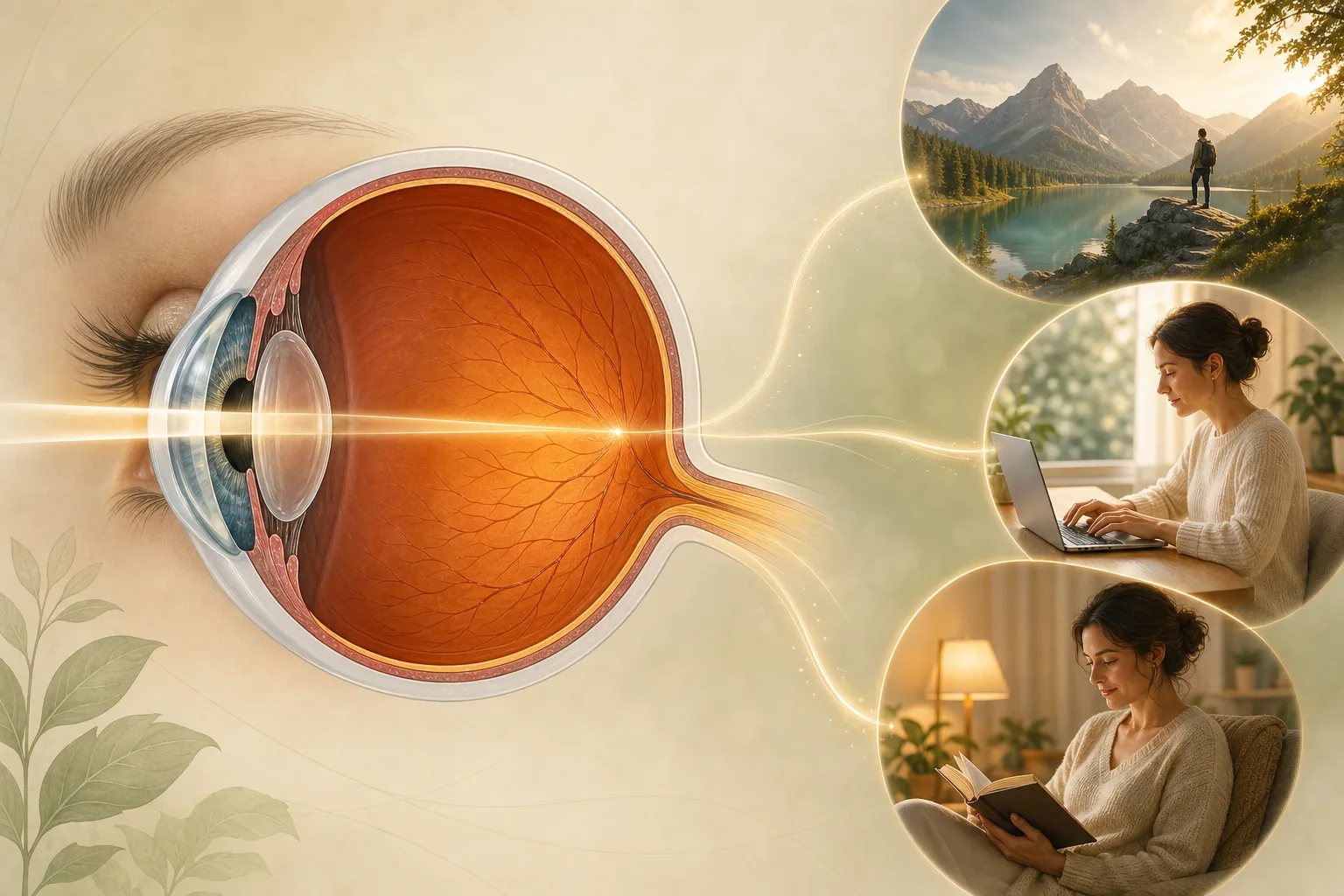
Explore vision topics
How the human eye works
A simple explanation of cornea, lens, retina, and how light becomes vision.
How the natural lens works
Your eye's natural autofocus: accommodation and why it changes with age.
Presbyopia
Why reading glasses become necessary after age 40 — and what it means for IOL choice.
Myopia and hyperopia
Nearsightedness, farsightedness, and how they affect your IOL calculations.
Astigmatism
When the cornea has different curvatures in different directions — and what can be done.
Contrast sensitivity
Why some people struggle to see in fog, dim light, or against similar backgrounds.
Visual acuity
What 20/20 really means — and why it is only part of the visual experience story.
Night vision
How the eye sees in low light, and why some IOLs affect it more than others.
Glare and halos
Rings around lights, light scatter, and positive dysphotopsia explained.
Why vision changes with age
The natural aging process of the eye and what can — and cannot — be restored with surgery.
Why glasses do not always give 20/20
Where optical correction stops — and how the retina, optic nerve and amblyopia can limit best-corrected vision.
New articles
All articles →
Contact lenses feel dry or blur: which material and fit should you choose?
Hydrogel, silicone hydrogel and rigid gas-permeable contact lenses; why oxygen is not a comfort ranking, and what a proper fitting checks.

Reading is harder after 45: would progressive glasses help?
Reading glasses, bifocals, everyday progressives and office lenses explained through phone, screen and distance tasks—with fitting problems and surgical alternatives.
Can you swim or shower in contact lenses?
Why pool, sea and shower water should stay away from contact lenses; infection warning signs, what to do after water exposure, and safer swimming vision.