Compare the broad pattern
More dots mean a more favourable result in that row. Read across a row; do not add the rows into one overall lens score.
The dots are an editorial guide to the broad pattern, not measured clinical scores, percentages or a promise for a particular model or eye.
| What matters to you | Monofocal | Enhanced monofocal | EDOF | Full range / trifocal |
|---|---|---|---|---|
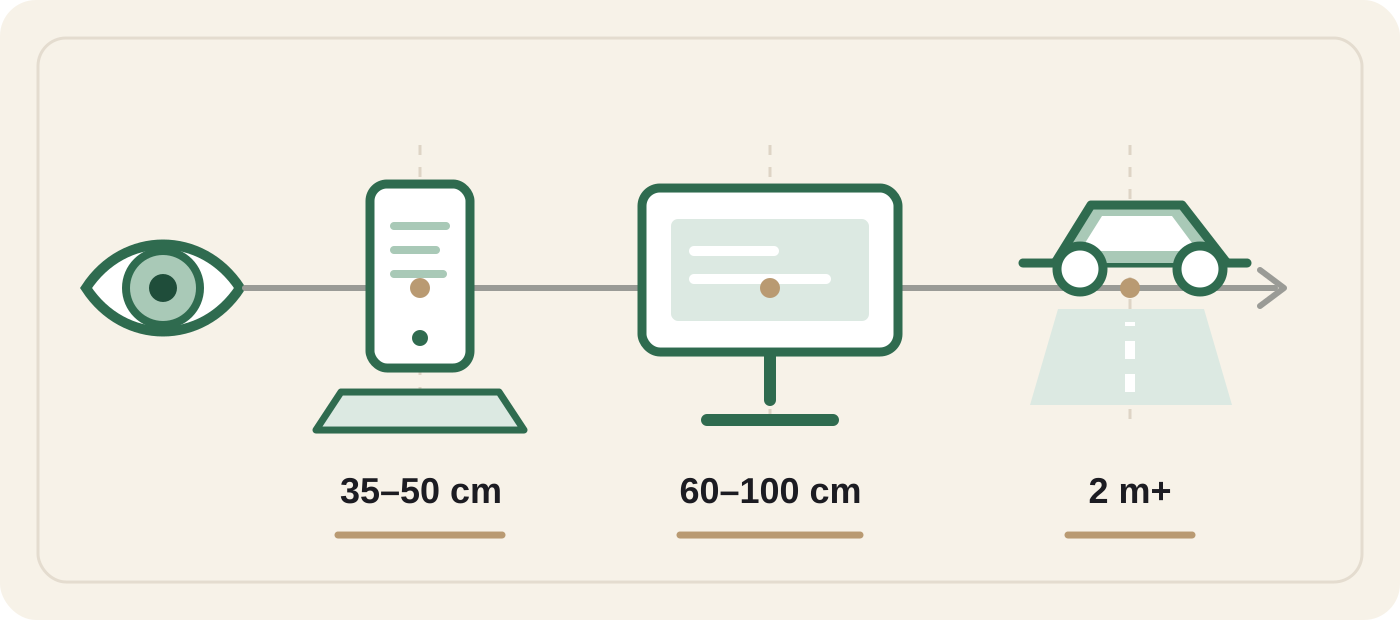
| Distance visionAbout 2 m and beyond | Excellent — the benchmark | Excellent | Excellent | Very good — the image may feel slightly softer |
| Intermediate visionComputer, about 60–100 cm | Glasses usually needed | Often usable without glasses* | Usually good | Usually good |
| Near visionBook and phone, about 35–50 cm | Glasses usually needed | Some improvement — reading glasses usually remain | Useful for some near tasks — fine print often needs glasses | Usually good |
| Spectacle independenceAcross everyday activities | Low — glasses for near | Moderate — some improvement | High for distance and intermediate — reading glasses often remain | Highest — most everyday tasks |
| Night visionMore dots → fewer night-time optical effects | Excellent — lowest risk | Very good | Good | Reduced — halos are more common |
| Halos and glareMore dots → fewer halos and less glare | Usually minimal | Usually low | Moderate in this overview | More common |
| Contrast sensitivityMore dots → better preserved contrast | Excellent | Close to a standard monofocal | Good | Lower in this overview |
| Ease of adaptationMore dots → usually easier to adapt | Usually little or none | Usually little or none | Some — days to weeks | More — weeks to months |
Monofocal
- Distance visionAbout 2 m and beyond
- Excellent — the benchmark
- Intermediate visionComputer, about 60–100 cm
- Glasses usually needed
- Near visionBook and phone, about 35–50 cm
- Glasses usually needed
- Spectacle independenceAcross everyday activities
- Low — glasses for near
- Night visionMore dots → fewer night-time optical effects
- Excellent — lowest risk
- Halos and glareMore dots → fewer halos and less glare
- Usually minimal
- Contrast sensitivityMore dots → better preserved contrast
- Excellent
- Ease of adaptationMore dots → usually easier to adapt
- Usually little or none
Enhanced monofocal
- Distance visionAbout 2 m and beyond
- Excellent
- Intermediate visionComputer, about 60–100 cm
- Often usable without glasses*
- Near visionBook and phone, about 35–50 cm
- Some improvement — reading glasses usually remain
- Spectacle independenceAcross everyday activities
- Moderate — some improvement
- Night visionMore dots → fewer night-time optical effects
- Very good
- Halos and glareMore dots → fewer halos and less glare
- Usually low
- Contrast sensitivityMore dots → better preserved contrast
- Close to a standard monofocal
- Ease of adaptationMore dots → usually easier to adapt
- Usually little or none
EDOF
- Distance visionAbout 2 m and beyond
- Excellent
- Intermediate visionComputer, about 60–100 cm
- Usually good
- Near visionBook and phone, about 35–50 cm
- Useful for some near tasks — fine print often needs glasses
- Spectacle independenceAcross everyday activities
- High for distance and intermediate — reading glasses often remain
- Night visionMore dots → fewer night-time optical effects
- Good
- Halos and glareMore dots → fewer halos and less glare
- Moderate in this overview
- Contrast sensitivityMore dots → better preserved contrast
- Good
- Ease of adaptationMore dots → usually easier to adapt
- Some — days to weeks
Full range / trifocal
- Distance visionAbout 2 m and beyond
- Very good — the image may feel slightly softer
- Intermediate visionComputer, about 60–100 cm
- Usually good
- Near visionBook and phone, about 35–50 cm
- Usually good
- Spectacle independenceAcross everyday activities
- Highest — most everyday tasks
- Night visionMore dots → fewer night-time optical effects
- Reduced — halos are more common
- Halos and glareMore dots → fewer halos and less glare
- More common
- Contrast sensitivityMore dots → better preserved contrast
- Lower in this overview
- Ease of adaptationMore dots → usually easier to adapt
- More — weeks to months
* Compared with a standard monofocal. Glasses are still usually needed for close reading.
Adaptation times are broad orientation, not a deadline. Many people use their vision comfortably sooner, while their perception of halos can continue to change over several months.
And what about contrast and lights at night?
Being able to read without glasses is not the whole decision. The ease of seeing faint details and how lights look at night also matter.
See what glare, halos and starbursts can look like →
Monofocal
Usually fewer halos and other optical side effects than with multifocals. The narrower range of focus is the main limitation.
Enhanced monofocal
Some extra screen vision while aiming to keep a monofocal-like visual experience. Check the evidence for the exact model.
EDOF
The category includes different optical designs. Contrast, halos and near vision must be compared model by model.
Full range / trifocal
More opportunity to read without glasses. Halos and glare are more common than with monofocals, and contrast can be reduced.
What changes the picture?
The particular model, eye health, accuracy of the result and distance to the task all matter. A monofocal can also be targeted for near vision. Choosing a different focus in each eye — monovision — changes this comparison. How the focus is chosen →
Questions for your surgeon
- Which options fit my eye health and daily needs?
- What would I still need glasses for, and what might I notice at night?
- If my vision differs from the plan, what can be checked or corrected?
Sources: ESCRS cataract-surgery guideline; model-level FDA evidence: PanOptix, Vivity, Symfony, Synergy, PureSee.
Deciding whether to pay extra? Compare the benefit, remaining glasses and the clinic quote.