Start with the manufacturer's promise
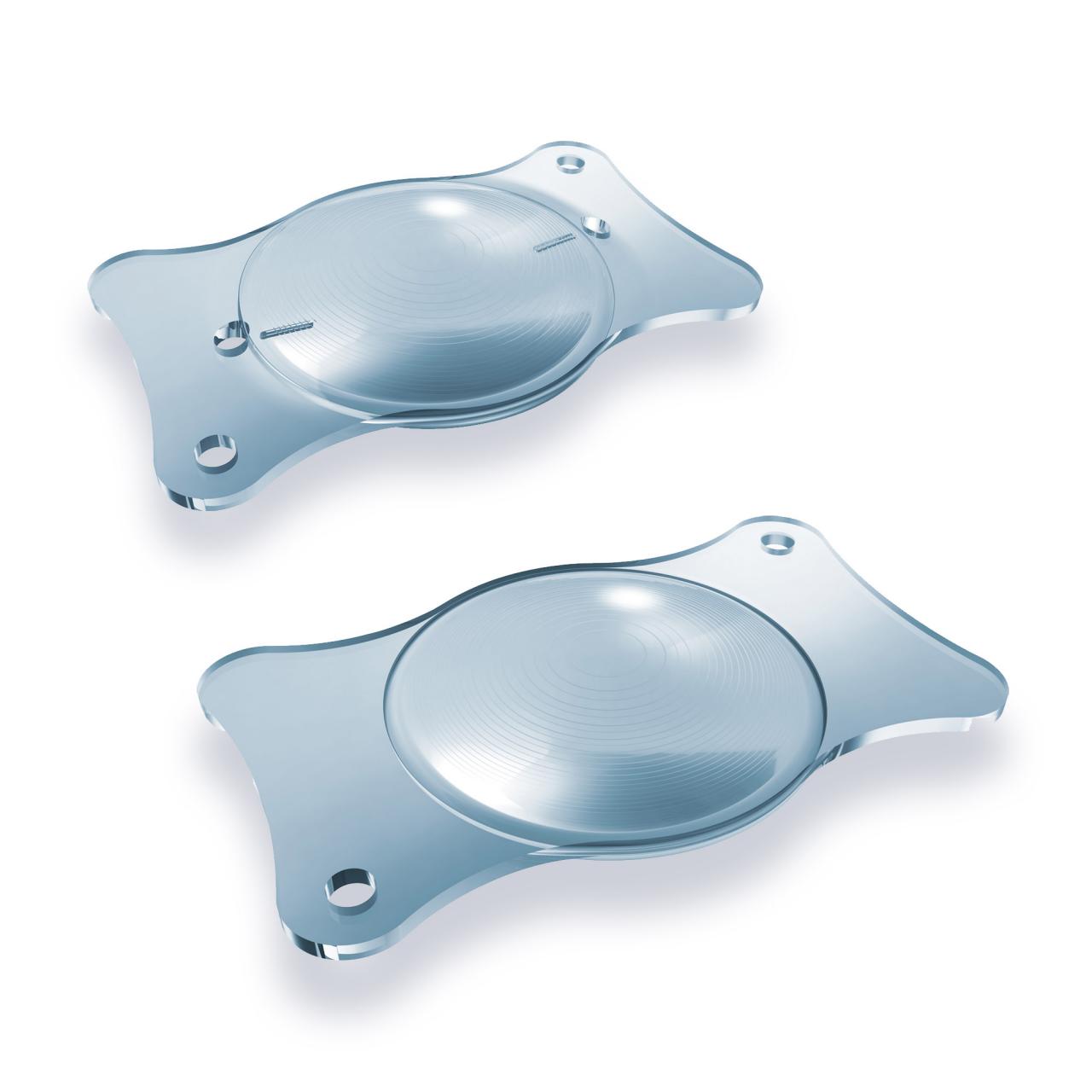
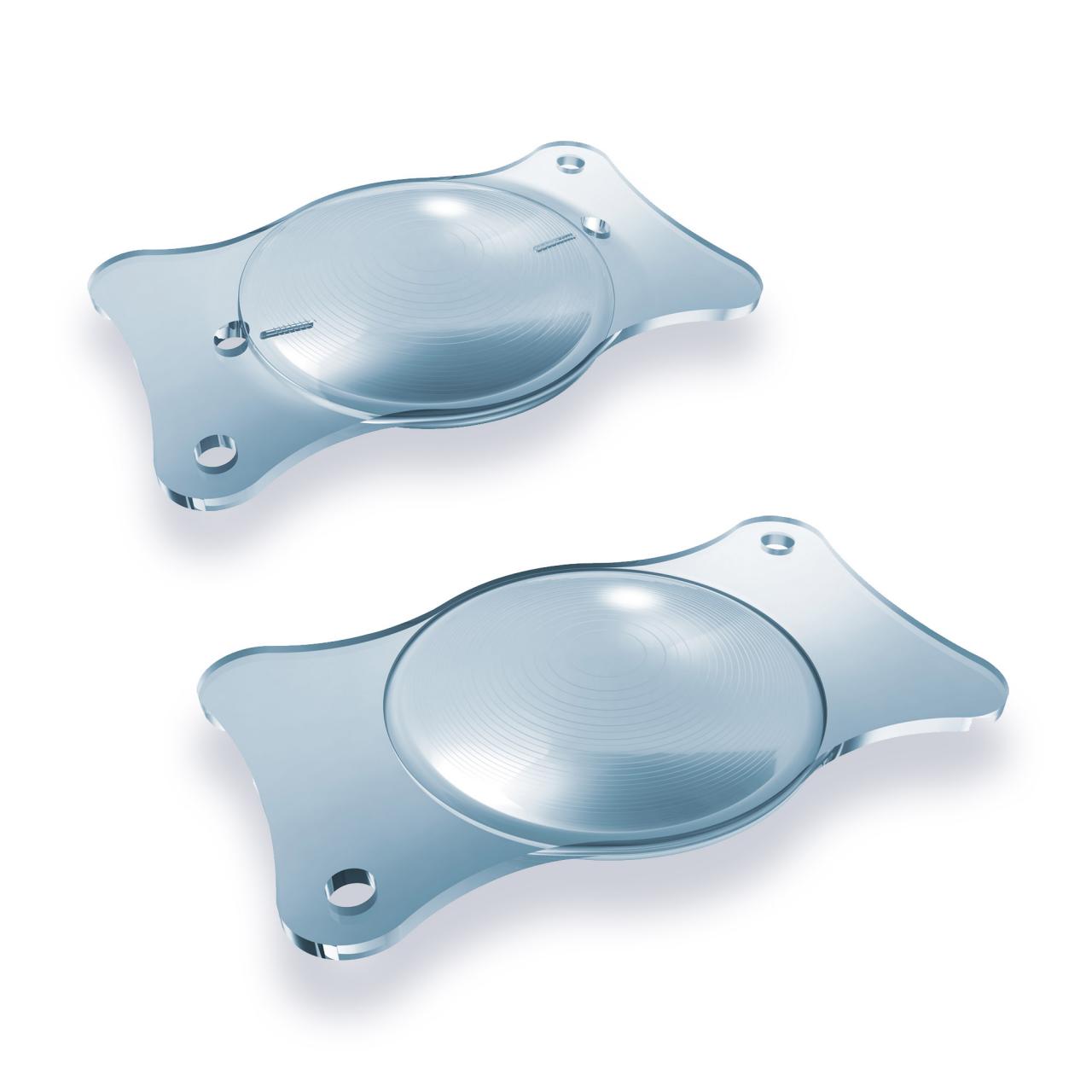
ZEISS promotes high spectacle independence, satisfaction and a large body of peer-reviewed publications. The optical idea is straightforward: diffractive steps divide light between distance, intermediate and near focus. They do not restore the natural lens's ability to change focus.
AT LISA tri 839MP is the non-toric model. The current catalogue lists AT LISA tri toric 949M/MP for regular corneal astigmatism; older clinical papers also describe 939M/MP. These names matter: a result for an older toric design is not automatically a rotation result for the newer version. The material is hydrophilic acrylic with hydrophobic surface properties—not hydrophobic acrylic throughout.
What does randomized evidence add?
A 2020 randomized comparison with Symfony involved 30 people. At 66 cm, Symfony had a small average advantage; the reported near difference did not reach statistical significance. Both groups could have troublesome halos. This review checked the original abstract, not an inaccessible full report, so it does not claim a complete bias assessment.
A 2026 randomized trial assigned 43 people to bilateral AT LISA tri, AcrySof PanOptix or Synergy. At three months, overall questionnaire scores did not differ significantly. The AT LISA group contained only 14 people. High scores also left little room to distinguish the lenses—the authors describe this measurement ceiling and exploratory design.
There is a reporting inconsistency worth retaining: the paper's narrative singles out an intermediate-vision item, whereas its displayed TyPE table does not show an overall difference for that item. This is a reason not to turn the reported isolated finding into a lens ranking. The study lacked masking and declared no conflicts of interest. Randomization strengthens comparison, but cannot fix small samples, short follow-up or inconsistent reporting.
Six years later: good function and substantial capsule treatment
The six-year study published in 2021 began with 92 people operated on years earlier. After exclusions and unsuccessful contact attempts, 62 answered telephone questions and 37 attended examination. Many retained useful vision and were satisfied; 19.4% reported some near-glasses need.
The same report found Nd:YAG capsulotomy in 89 of 124 eyes of the interviewed group—71.77% over six years. This laser treats clouding of the membrane behind the implant, not a cloudy IOL that must automatically be replaced. The rate belongs to this centre and its treatment criteria; it is not your predicted risk or proof that every other lens performs better.
A ZEISS grant supported the study. Some light-related symptoms remained bothersome after six years. Selection and historical comparisons prevent a conclusion that every person adapts fully. Satisfaction and later treatment can coexist.
How much confidence should each claim carry?
| Question | Evidence and limitation |
|---|---|
| Can it support near and intermediate vision? | Repeated clinical observations and comparative studies support this in selected eyes. Glasses may still be useful. |
| Is it the best trifocal? | The reviewed small trials do not establish a universal winner or equal outcomes for every model. |
| Does a long history mean no later treatment? | No. The six-year report includes substantial YAG use; evidence is observational and centre-specific. |
| Do toric variants behave identically? | Exact model, refractive target and astigmatism correction must be checked separately. |
A large publication count is not the same as a large number of well-designed independent randomized trials. How to read clinical data explains the difference. This search did not establish an exact AT LISA tri FDA SSED; local authorization and the proposed model's instructions must be checked in your country.
Good visual acuity does not guarantee comfortable night driving
Splitting light gives useful additional focal points, but some people notice halos, glare or reduced contrast. Satisfaction surveys and high-contrast visual acuity describe different parts of the experience. A surgeon needs to consider the tear film, corneal shape, retina, optic nerve, residual prescription and the tasks that matter to you.
For frequent night driving, the useful comparison is not simply old versus new. It is the extra reading freedom you seek versus the optical symptoms you are willing to accept. Compare PanOptix Pro and the newer AT ELANA only when their exact clinical evidence and your circumstances are considered; newer material alone does not prove a better personal outcome.
A practical conclusion
AT LISA tri has a meaningful clinical history and a plausible role for people seeking several useful distances without glasses. The honest conclusion is not that it is perfect or poor: its reading benefit, photic symptoms and potential later capsule treatment need to be weighed together.
- Which exact non-toric or toric model is planned, and why?
- How does my reading distance compare with the distances measured in the relevant study?
- What is the follow-up plan if night symptoms, residual astigmatism or capsule clouding limit vision?
Sources and editorial approach
- Official ZEISS AT LISA tri catalogue: current names, material and manufacturer claims.
- Lubinski et al., 2020: randomized comparison with Symfony; original abstract reviewed, full-report limitations retained.
- Subjective visual quality randomized trial, 2026: full methods and tables reviewed; exploratory, unmasked and small.
- Fernández et al., 2021: full six-year report, ZEISS-supported observational evidence with selection and follow-up limitations.
- Oleksii's Symfony review and Synergy review: the approach to contrast and optical compromises, not personal review approval of this new article.
Educational information—not a diagnosis or medical prescription. An eye-care professional must assess your eyes and medical suitability before treatment or surgery.