The short answer
Galaxy has randomized FDA-reviewed evidence of better near vision than a monofocal and a useful range of focus. ‘Non-diffractive’ does not mean halos are impossible or that contrast is identical to a monofocal. The evidence does not yet establish universal superiority over other premium lenses.
The main clinical data below concern hydrophilic RAO605G. Galaxy Toric RAO615X and the newly announced hydrophobic Galaxy need their exact model and evidence checked separately.
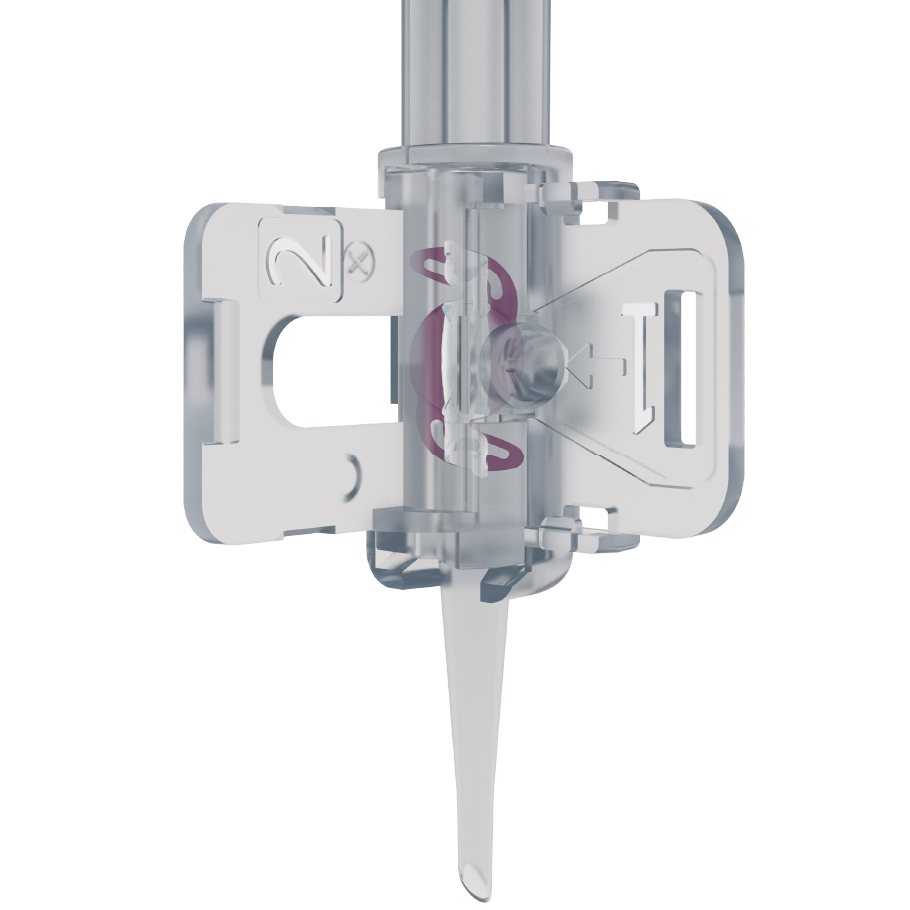
Start with the manufacturer's claim
Rayner describes a non-diffractive spiral surface, designed with AI, to give a continuous range from distance to near with less halo. The launch brochure also claims no light loss. AI describes how a design was developed; it is not a clinical level of evidence.
Likewise, ‘no light loss’ is not a promise of perfect contrast or symptom-free night driving. Light can still be distributed over a range of focus rather than concentrated at one distance. The meaningful question is how people see and what bothers them—not whether all light is called useful.
FDA describes Galaxy as a multifocal/trifocal IOL, while Rayner emphasizes its non-diffractive spiral mechanism. These labels describe different aspects: the functional range and the method of producing it. Neither label alone predicts your experience.
The stronger patient comparison: the FDA trial
FDA approved RAO605G and toric RAO615X on 24 September 2026. The open SSED includes a prospective randomized, masked study at ten US sites: 230 people assigned to hydrophilic non-toric Galaxy or monofocal RayOne RAO600C. There were 227 in the safety group, and 219 had the final six-month assessment. The main Galaxy randomized comparison was not against a diffractive trifocal.
At 40 cm, distance-corrected near acuity favored Galaxy by 0.275 logMAR—about 2.75 chart lines—with a statistically significant difference. Correcting the distance prescription for that test is important: it is not the probability of reading all print without glasses.
Mean corrected distance acuity in bright light was 0.031 logMAR for Galaxy and −0.035 for the monofocal; lower is better. Galaxy met the primary acuity threshold, and the distance comparison met its allowed non-inferiority margin. Neither result means Galaxy was better at distance; the mean favored the monofocal. A passed threshold and superiority are not the same claim.
Non-diffractive does not mean no halos
At the six-month FDA questionnaire, 12 of 110 Galaxy respondents—10.9%—reported halos very often, compared with 1 of 109 monofocal respondents—0.9%. Most reported halos were not at all or only a little bothersome. Frequency, severity and bother are different questions: do not combine their percentages as though each counted the same people.
Dim-light contrast without glare met the predefined ISO criterion: at each tested spatial frequency, the mean was no more than 0.3 log units below the monofocal control. That is an allowed margin, not proof of identical contrast. Some patient-vision questions were exploratory and not validated to current standards; their descriptive answers should not become precise comparative guarantees.
This does not make Galaxy a poor lens. It shows that a promising design still involves compromises. See glare and halos and contrast sensitivity.
Safety: a passed safety criterion does not mean no complications
The FDA report met its main safety criteria. It also records three serious ocular events in two of 112 first-operated Galaxy eyes, considered unrelated to the lens, and three in three of 111 second-operated Galaxy eyes; one second-eye lens exchange was considered device-related. These are small event counts with different eye counts, not a precise prediction of your personal risk. The report's zero optical-property interventions should not be rewritten as zero complications or zero lens exchanges.
The earlier paper: separate the simulator from surgery
A full 2025 paper reports two different parts. Thirty healthy young participants compared Galaxy with RayOne Trifocal through a vision simulator. The clinical part followed 73 people, 146 eyes, implanted with Galaxy or Galaxy Toric at ten centres for three months; there was no implanted comparison group.
The clinical results showed useful distance, intermediate and near acuity and generally minor halo/glare reports. That supports the feasibility of the lens. It does not prove fewer postoperative halos than other trifocals: the direct comparative advantage came from the simulator, not a randomized implanted comparison.
The paper was funded by Rayner, including writing assistance, and several authors disclosed industry relationships. Its selected eyes, small sample and short follow-up also matter. Different questionnaires and times can produce different symptom summaries; the favorable early series should not erase the later FDA frequency table.
An optical study adds an interesting qualification
A 2026 open laboratory study measured one specimen of each lens and modeled its optics. It found a smooth extended focus but lower peak distance contrast than the monofocal. The authors suggested much of the focus extension was explained by spherical-aberration components; the specific contribution of the spiral remained less clear.
That challenges an overly simple ‘the spiral explains everything’ story, not the fact that patients can gain a useful range. One specimen, monochromatic modeling and no patient outcomes cannot establish the best clinical lens. One author disclosed BVI consultancy and royalties. Read how lab testing works and how to read clinical evidence.
Exact model and eye health matter
The FDA study excluded previous LASIK/PRK/SMILE, significant corneal pathology, glaucoma and severe dry eye among other conditions. Its results are not a direct prediction for those eyes. Toric approval also used additional evidence from the EMV Toric platform; it was not a separate randomized Galaxy Toric-versus-premium trial.
Rayner announced a hydrophobic Galaxy in September 2026. Its pre-launch performance claim referenced a simulator and data on file. The hydrophilic FDA trial should not be relabeled as a completed trial of this new material/version. Ask for the current local instructions and exact model.
Three useful questions
- Which material and exact Galaxy model would I receive?
- Which benefit is established in implanted patients rather than optical simulations?
- For my eyes and night-driving needs, what compromises and possible glasses use remain?
Our conclusion
Galaxy is a credible full-range option with stronger evidence now than an early uncontrolled report alone. Its near advantage over a monofocal is real in the tested setting. Claims of no optical compromise, no halos or a universal premium-lens winner go beyond that evidence.
Compare with the Vivity and PureSee reviews by matching the question and study design, not marketing graphs. Oleksii's review of IOL claims and patient measurements explains the approach; it is not a personal Galaxy clinical review.
Sources and their limits
- FDA SSED P060011/S045: exact models, randomized non-toric study, tables 25–30, contrast criterion and exclusions. Stronger direct evidence against RAO600C, not superiority to other full-range lenses.
- Abela-Formanek et al, 2025 full paper: Rayner-funded; simulator comparison plus uncontrolled 73-person implanted series. These are not one randomized clinical comparison.
- 2026 open optical characterization: one lens per model, simulated monochromatic eye; explains mechanisms, not patient success rates.
- Rayner launch brochure: manufacturer claims, including light loss; key optical claims cite data on file.
- Rayner hydrophobic announcement: distinguishes the new material and simulator-based pre-launch claims.
- Rayner official Galaxy page: platform and source of the official delivery-system image.
Educational information—not a diagnosis or medical prescription. An eye-care professional must assess your eyes and medical suitability before treatment or surgery.