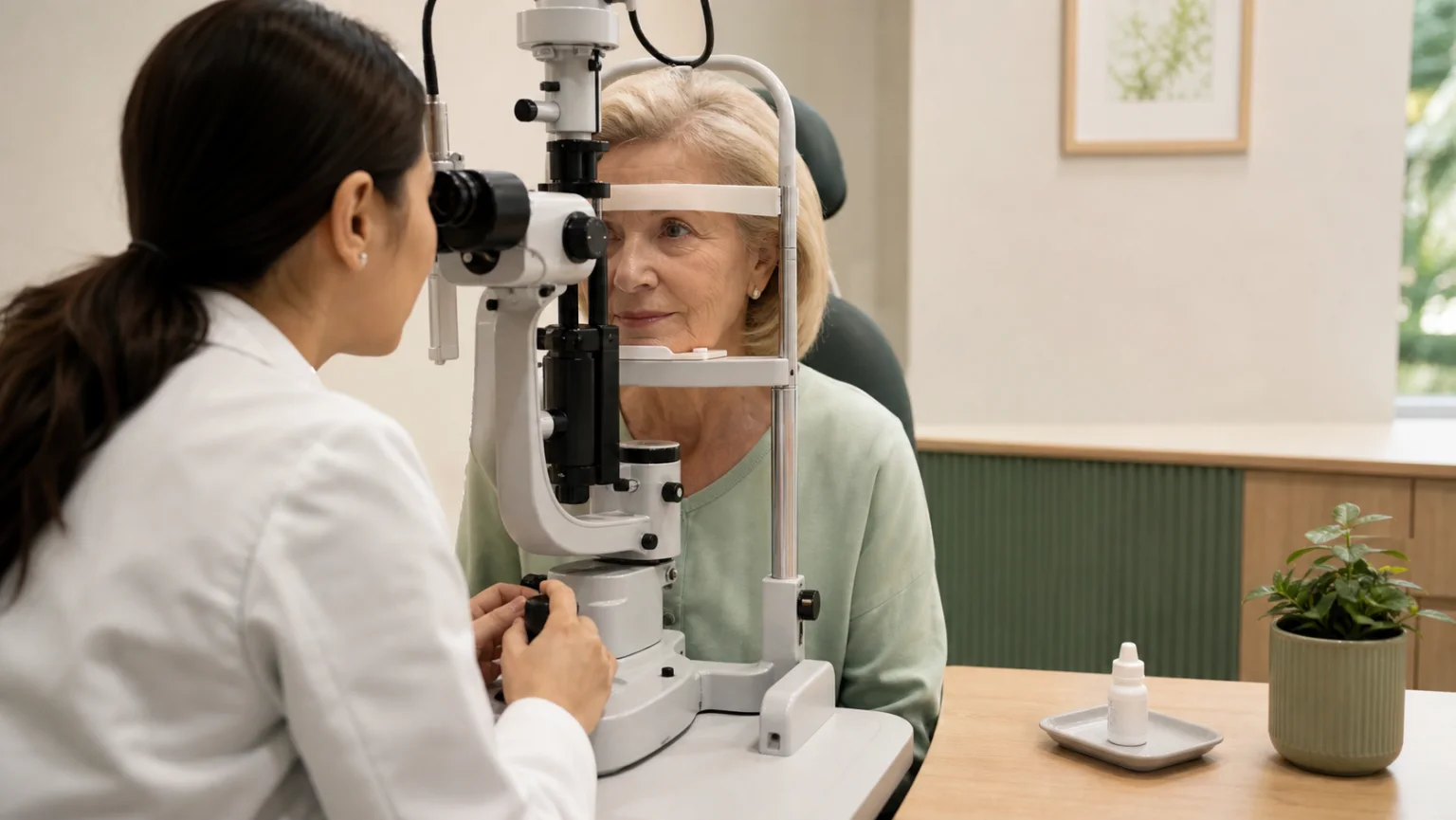
Dry eye is not only a comfort problem. A thin, smooth layer of tears covers the clear front surface of the eye, the cornea. Light passes through this tear film first. When it breaks up unevenly, vision can fluctuate and the corneal measurements used to calculate an intraocular lens may become less repeatable.
This matters most when the goal is precise refractive correction, a toric IOL or a lens intended to reduce dependence on glasses. Treating a clinically significant ocular-surface problem may delay final measurements, but it can make the plan more reliable.
How dry eye changes measurements
Keratometry and corneal topography measure the shape and focusing power of the cornea. An unstable tear film can alter measured curvature, the amount and axis of astigmatism, and therefore the predicted IOL power. Systematic reviews found that dry-eye signs — particularly reduced tear-film stability — can reduce the repeatability of these measurements, while appropriate treatment before repeat measurements for IOL calculation (biometry) can reduce refractive error.
Symptoms and signs do not always match. Some people report burning, grittiness, redness or fluctuating blur. Others have few symptoms but an irregular surface visible during examination. Feeling comfortable does not by itself prove that measurements are stable.
Why surgery can make symptoms more noticeable
Cataract surgery temporarily affects the ocular surface through the incision, microscope light, antiseptic preparation and postoperative drops. Reduced blinking and problems with the eyelid glands that supply the oily part of tears (meibomian glands) can add to the problem. For many patients symptoms are temporary, but significant dry eye may take longer to settle and can reduce early visual quality even when the IOL is correctly positioned.
What should be checked before the final measurements for IOL calculation?
- How evenly the tear film lasts between blinks, and whether an examination dye shows damaged spots on the eye surface.
- Eyelid margins and meibomian gland function.
- Whether topography and keratometry are repeatable.
- Contact-lens wear and the clinic’s instructions about stopping lenses before measurement.
- Medicines, autoimmune disease, previous eye surgery and environmental factors.
The appropriate treatment depends on the cause. It may include preservative-free lubricants, eyelid hygiene, management of meibomian gland dysfunction, prescription anti-inflammatory therapy or other targeted treatment. Do not start or stop prescription drops based on an online article. The important sequence is: identify the surface problem, treat it, confirm stability, and then finalize the IOL calculation.
Questions to ask the clinic
- Are my corneal measurements and astigmatism stable enough for lens planning?
- Do I need treatment, followed by repeat measurements, before the final IOL calculation?
- Which symptoms should I expect after surgery, and when should I contact the clinic?
The practical conclusion
A perfect IOL formula cannot compensate for an unstable surface measurement. If your clinic postpones biometry to treat dry eye, that is not wasted time: it is part of refractive planning. A stable tear film improves the quality of the data on which your lens choice depends.
Editorial addition: IOL Adviser · 10 October 2026
What should a repeat measurement actually confirm?
Being asked to return for another measurement can feel like the clinic has not decided what to do. But if the readings change between visits, finalizing the lens from the first set of numbers is not a reassuring shortcut. The useful question is what changed and what the next visit must confirm.
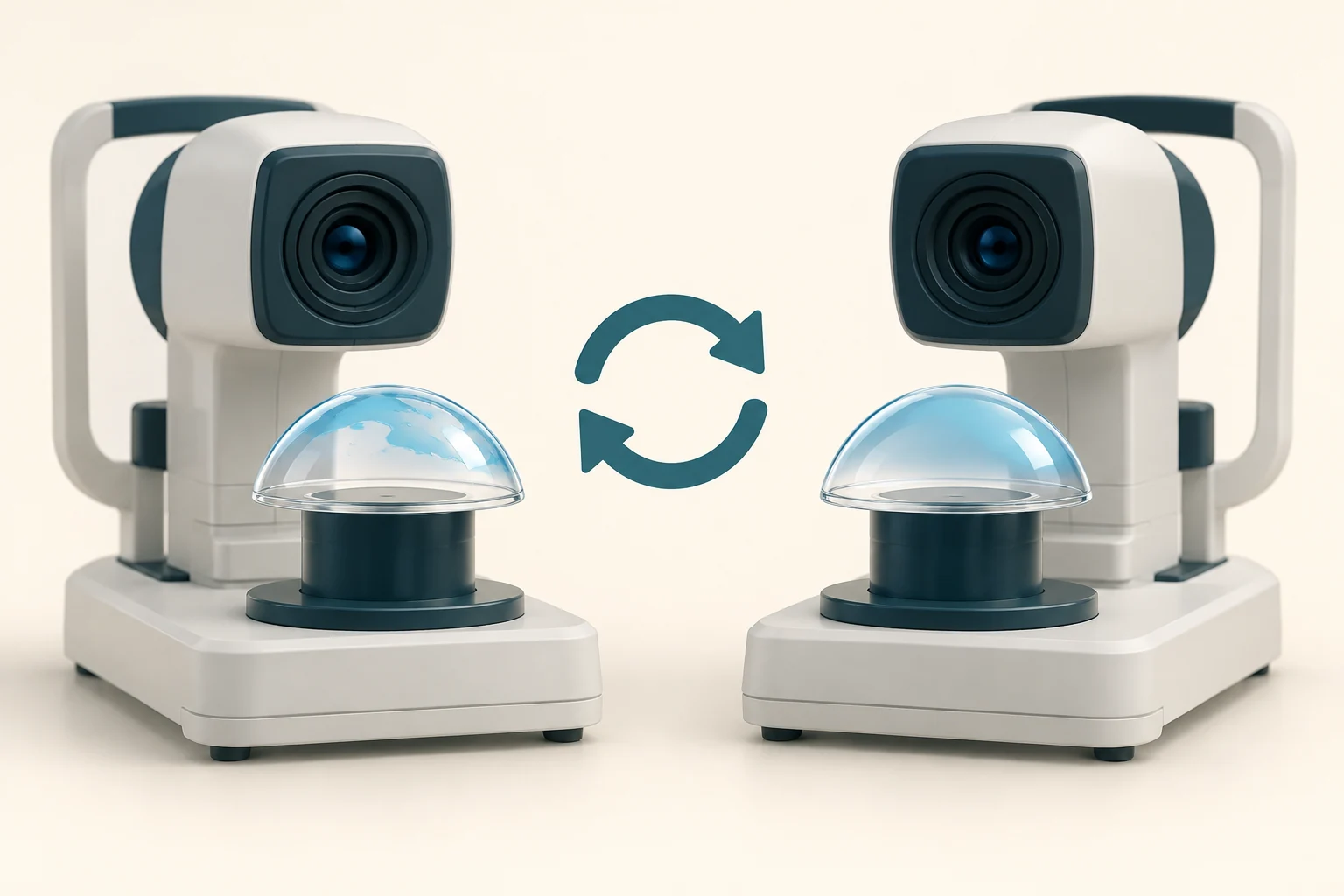
Comfort and reliable readings are different checks
“My eyes feel better” is useful information, but it does not show whether the measured corneal shape is now repeatable. Conversely, being told you have dry eye does not prove that every reading is unusable. The team needs to assess the surface and the actual measurements together.
Ask the clinic to explain whether the repeat visit is checking the corneal shape, the amount of astigmatism, or the calculation for the implant. You do not need to choose a formula yourself. You need to understand why the final plan can now be trusted.
A course of drops is not proof that the calculation improved
In a randomized study of 131 people, two weeks of additional artificial tears did not significantly improve measurement repeatability or how accurately the calculation predicted the postoperative need for optical correction. That is a result for the treatment and conditions studied—not proof that dry-eye treatment never helps. Nilsen and colleagues, 2024.
The practical distinction is important: completing treatment and confirming a stable measurement are not the same step. Do not start, stop or change drops to obtain a particular reading. Follow the clinic's instructions and tell the team what you used and when.
Leave the repeat appointment with an understandable plan
- The measurements that are now consistent enough to use.
- Any treatment or further checks still needed before choosing the implant.
- Any change to the proposed lens or expected need for glasses.
Write down the answer in ordinary language. “We repeated the surface measurements and kept the same plan” is a useful conclusion. “The machine printed another page” is not an explanation. The surgeon determines whether the measurements are adequate; the patient should understand what was confirmed.
Sources and evidence
Sources support the medical statements. The interpretation and plain-language explanations are Oleksii Sologub's.