The simple answer
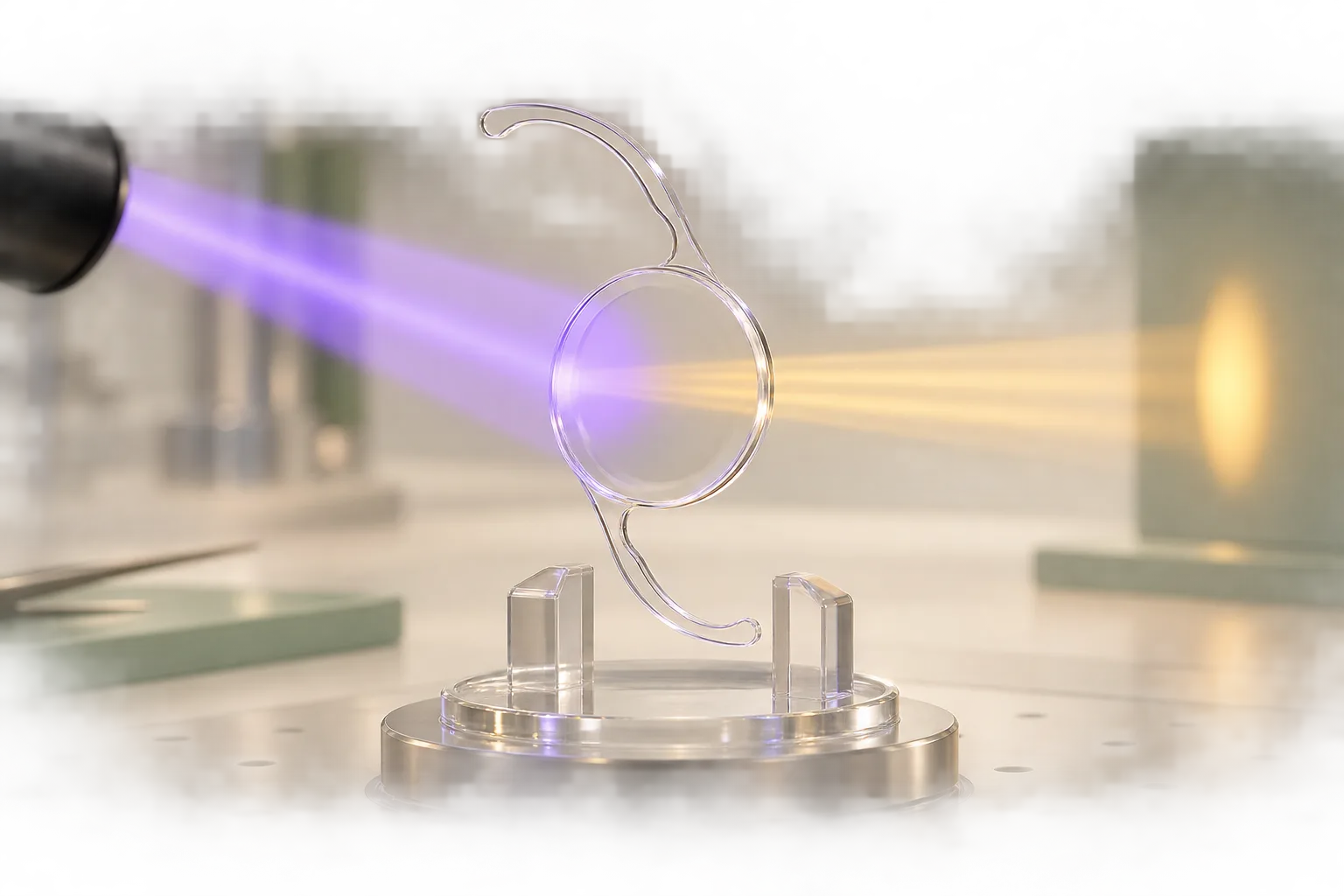
The Light Adjustable Lens lets the clinical team adjust remaining nearsightedness or farsightedness and astigmatism after the lens is inside the eye. This can help bring the result closer to the focus target agreed before treatment.
It does not create accommodation. It does not remove cataract-surgery risks. And the lens does not remain adjustable forever.
What this looks like in daily life
With a fixed lens, the power decision is made before surgery and the eye then heals around that choice. With LAL, the team waits for healing, measures the refraction, lets you experience a target, performs one or more ultraviolet-light adjustments, and then locks the result.
That sounds attractive—and it is also a treatment programme, not a one-day implant. You need repeat visits, reliable refractions, and strict ultraviolet-protection compliance until the process is complete. Current US safety information requires RxSight-specified UV glasses during waking hours until 24 hours after the final lock-in treatment; regional labelling must be checked.
The part many explanations miss: a monovision test drive
LAL remains a monofocal lens. Its distinctive practical advantage is not that it suddenly becomes multifocal. It is that one eye can be adjusted for distance and the other a little nearer, then you can experience that binocular plan before the final lock-in. Surgeons call this monovision.
Monovision can reduce glasses use, but not everyone is comfortable with the difference between the two eyes. Stereo or depth perception can be reduced, or the vision can simply feel unbalanced. Contact lenses can sometimes test monovision before surgery, but a mature cataract or difficulty wearing contacts may make that unrealistic. LAL lets the adjustment period become the test drive. That is a real advantage; it still does not create full-range vision in each eye.
The trade-off
You gain postoperative adjustability. The extra work is practical: strict compliance, repeated treatment visits, and a finite labelled adjustment range. Dry eye or unstable refraction can complicate treatment-day decisions. Travel or inability to follow UV rules can make a technically appealing lens a poor practical fit.
The original LAL and LAL+ are not the same. LAL+ adds a central power profile intended to broaden depth of focus. That does not make it a trifocal or guarantee unaided small-print reading. Range still depends on the target in each eye and the binocular strategy.
What adjustable does not mean
- perfect refraction or permanent freedom from glasses;
- correction of retinal, optic-nerve, corneal, or ocular-surface disease;
- unlimited future adjustment after lock-in;
- full-range vision from a distance target;
- suitability for someone who cannot complete visits or follow the UV-protection protocol.
Current RxSight safety information lists contraindications and warnings including some photosensitising or retina-toxic systemic medicines, ocular herpes history, nystagmus, and inability to follow the postoperative regimen. FDA approved a labelling reconfiguration and content update under supplement S054 in June 2026, so the treating practice—not an old PDF saved from the internet—must check the current regional professional label and the complete medication history.
Questions for the treating practice
- Which version — LAL or LAL+ — and focus targets are you proposing for my two eyes?
- What measurement, adjustment and lock-in visits will I need, and when must I wear UV-protective glasses?
- What is the plan if measurements are unstable or I still need glasses or another correction?
Sources: FDA LAL/LDD approval record and supplements; FDA supplement S054 labelling update; current RxSight postoperative safety information; LAL vs LAL+ clinical registry; systematic review of pseudophakic monovision.